Body Mass and Composition Analysis – Bioimpedance with the “Aminogram” Biody Xpert ZM3 Device
Bioimpedance analysis of body mass and composition using the Biody Xpert ZM3 is a quick, non-invasive and painless examination that provides a detailed assessment of body composition, including fat mass, fat-free mass, skeletal muscle mass, total body water and its distribution, as well as other parameters related to nutritional and physical status.
Unlike conventional scales, which show only total body weight, the Biody Xpert ZM3 provides a much broader understanding of what the body weight consists of. This is particularly valuable for monitoring weight loss, changes in muscle mass, the results of nutritional therapy and physical training programmes, as well as changes in body composition over time.
The Biody Xpert ZM3 is a CE-certified medical bioimpedance device developed by the French company “Aminogram”
The device uses bioimpedance spectroscopy (BIS) technology with frequencies ranging from 1 to 1000 kHz. According to the manufacturer’s scientific review, the Biody Xpert ZM3 uses 54 frequencies, allowing a more detailed assessment of body fluid compartments.
|
|
Key Benefits
|
What is bioimpedance?
Bioimpedance, or BIA (Bioelectrical Impedance Analysis), is a method used to assess body composition by applying a very low-intensity electrical current. Different tissues in the body conduct electrical current differently.
During the measurement, electrical resistance, reactance and total impedance are determined. These data are used in validated predictive equations to estimate parameters such as hydration, skeletal muscle mass and fat mass.
The Biody Xpert ZM3 uses a tetrapolar measurement in which electrical signals are obtained between the hand and foot. According to the manufacturer, the body composition equations used are based on equations published in scientific literature and validated against reference methods.
What can be assessed with the Biody Xpert ZM3?
Bioimpedance analysis provides a structured body composition profile. Depending on the selected report, it can assess:
- body fat mass;
- fat-free mass;
- skeletal muscle mass;
- appendicular skeletal muscle mass, i.e. muscle mass in the arms and legs;
- total body water;
- intracellular fluid;
- extracellular fluid;
- fluid distribution;
- body cell mass;
- basal metabolic rate;
- other body composition and bioelectrical parameters.
According to the manufacturer, the Biody Xpert ZM3 system provides more than 100 analysable data points.
Important: Bioimpedance results should not be interpreted in isolation. Particularly in the presence of health conditions, the results should be assessed together with the person’s overall health status, symptoms, laboratory findings and other clinical information. The Aminogram scientific review also emphasises that results should be interpreted with particular caution in cases of significant disturbances in hydration.
Who may benefit from body composition analysis?
During weight loss
Conventional scales do not show whether the weight lost consists of fat, fluid or muscle mass. Repeated body composition analysis helps assess the quality of weight loss and determine whether changes are occurring in the desired direction.
It may be particularly useful:
- at the beginning of a weight-loss programme;
- when adjusting a nutritional plan;
- while using physician-prescribed therapy for obesity;
- after bariatric procedures or surgery, according to the recommendations of the treating specialist.
For assessing nutritional status
Bioimpedance is also used in clinical nutrition because it provides information not only about fat mass but also about changes in muscle mass, fat-free mass and hydration. In scientific literature, bioimpedance is used in the assessment of malnutrition, sarcopenia, obesity and sarcopenic obesity.
For physically active people and athletes
Regular body composition monitoring can help assess:
- changes in muscle mass;
- changes in body fat mass;
- hydration;
- the effectiveness of a physical training programme.
Bioimpedance analysis is also used in sport to monitor body composition during physical training.
In the context of healthy ageing
With age, it is important to monitor not only body weight but also the preservation of muscle mass. A reduction in muscle mass may go unnoticed if overall body weight does not change significantly.
Body composition analysis can therefore be one of the tools used by a specialist to assess age-related changes in the body.
How is body composition measured?
The Biody Xpert ZM3 uses a tetrapolar bioimpedance measurement, with the electrical signal passing between the hand and foot.
The Biody Xpert ZM3 stands out for its compact, portable design and ease of use in everyday clinical practice
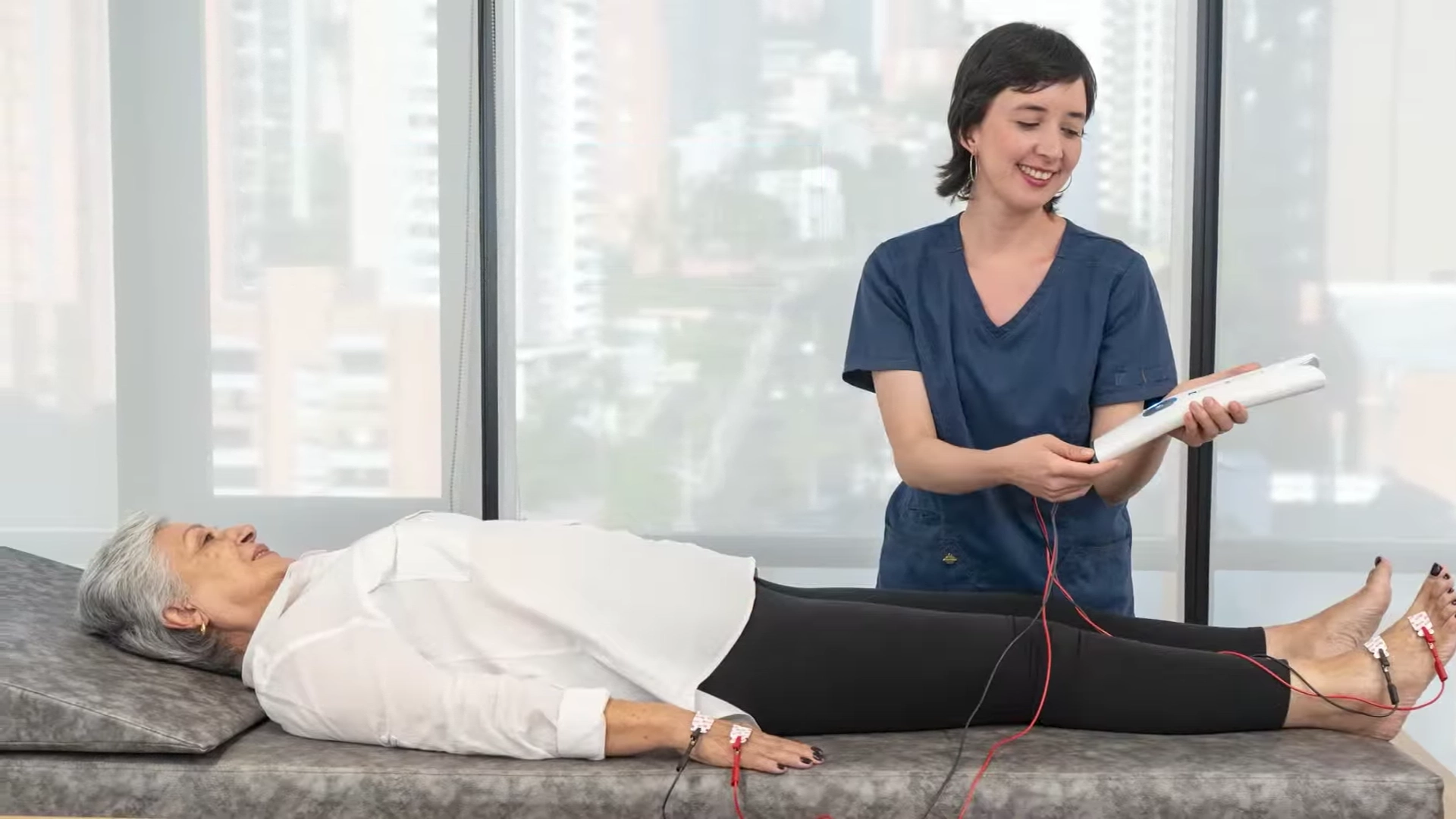
The Biody Xpert ZM3 can be used either in a seated position with integrated electrodes or in a supine position using cables and disposable electrodes.
Seated measurement can reduce examination time and avoid the need for additional disposable materials, making the device particularly suitable for regular use during consultations and in different clinical settings.
The manufacturer also describes the Biody Xpert ZM3 as a portable bioimpedance spectroscopy device combining mobility with extensive body composition analysis capabilities.
Two measurement options are available:
- seated, using the device’s integrated electrodes;
- supine, using cables and disposable electrodes.
This allows the measurement to be adapted for people with limited mobility.
In a small comparative study involving 30 participants conducted by the manufacturer, bioelectrical parameters obtained in the seated and supine positions were very similar. In the same study, body composition results were also compared with the DEXA reference method, with the authors reporting good agreement between the data.
How to prepare for bioimpedance analysis?
Body composition measurements may be influenced by hydration, a recent meal, physical activity and other factors. Therefore, repeated measurements should preferably be performed under as similar conditions as possible.
To make results easier to compare over time:
- follow the preparation recommendations provided by the specialist;
- repeat measurements at a similar time of day whenever possible;
- inform the specialist about any changes in your health;
- inform the specialist about significant oedema, dehydration or other conditions that may substantially alter body fluid levels;
- keep previous measurement results for comparison.
The result: more than a number on the scales
The main value of body composition analysis lies in the ability to see changes in body composition rather than focusing only on kilograms.
For example, even if total body weight remains unchanged, the analysis may show that:
- fat mass has decreased;
- muscle mass has increased or been maintained;
- body water has changed.
For this reason, bioimpedance analysis can be useful as a regular tool for monitoring results and changes, particularly during weight-loss, nutritional therapy and physical training programmes.
According to the Aminogram scientific review, bioimpedance is used in clinical practice to identify body composition imbalances, support nutritional or physical training strategies and evaluate their effectiveness over time.